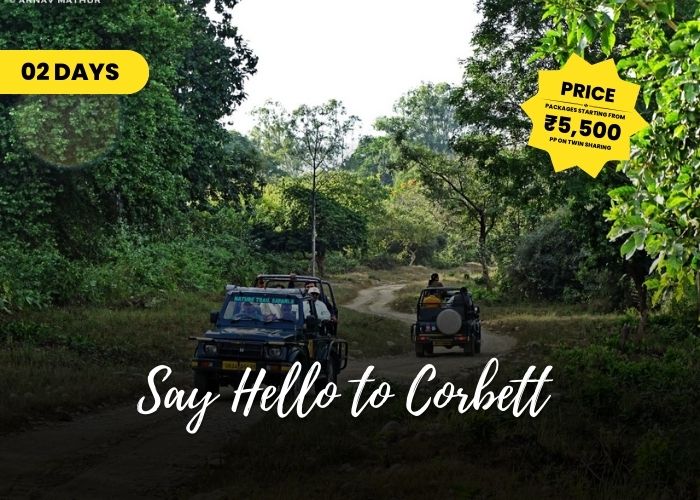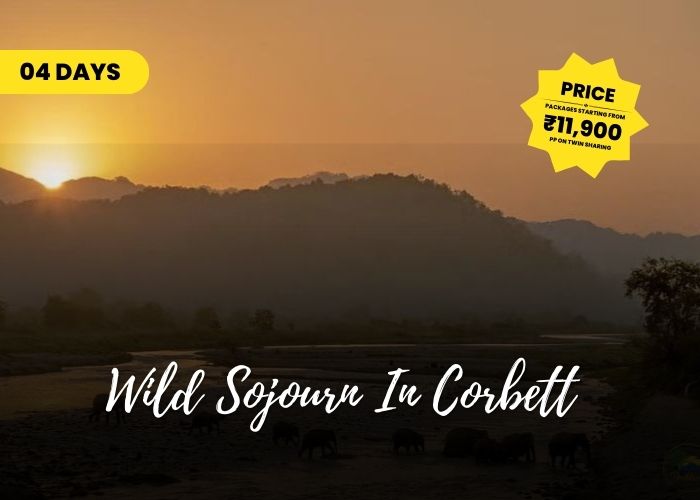
The Dhela Zone in Jim Corbett National Park is a newer yet captivating safari zone known for its rich biodiversity and peaceful surroundings. Open year-round, it offers a mix of dense sal forests, grasslands, and water bodies that attract tigers, elephants, leopards, deer, and numerous bird species. Located near Ramnagar, Dhela provides an offbeat and serene wildlife experience, perfect for nature enthusiasts seeking a quieter and equally thrilling Corbett safari adventure.
It's highly recommended to book well in advance, especially the safari permits, which open slots up to 45 days prior. The Official Corbett Tiger Reserve website is the only source to get a safari permit. You'll need to provide ID details for all visitors. Be aware that permits are generally non-refundable. Corbett Waala also facilitate Corbett Safari bookings, often including permit, jeep, and a guide. Remember to carry your original ID!
You can only book a permit through the official website, rest other essentials like jeep and guide need to book manually. You can simply ask us to do all the hard work for you.
Jim Corbett National Park, located in Uttarakhand, is one of the most popular wildlife destinations in India. Known as the country’s first national park and the birthplace of Project Tiger, it attracts thousands of wildlife lovers every year. The biggest highlight of visiting Corbett is undoubtedly the jungle safari, which allows visitors to explore the dense forests, riverbeds, and grasslands while spotting tigers, elephants, leopards, deer, and hundreds of bird species.
If you are planning a Corbett jungle safari, here’s everything you need to know about the types of safaris, different zones, the best time to visit, useful tips, and answers to the most asked questions.
Nestled in the southern stretch of the magnificent Jim Corbett National Park, the Dhela Zone is one of the newest and most fascinating eco-tourism zones, offering a perfect blend of serenity, scenic beauty, and thrilling wildlife encounters. Opened for tourism in 2014, Dhela is rapidly gaining popularity among wildlife enthusiasts for its tranquil environment, diverse ecosystem, and good chances of spotting the majestic Royal Bengal Tiger.
Spread over lush forests, open grasslands, and water bodies, Dhela Zone showcases the raw and untamed charm of Corbett in its purest form. It’s a must-visit destination for those who wish to experience the quieter side of the jungle while still enjoying all the excitement a Corbett safari offers.
The Dhela Zone forms part of the southern buffer area of the Corbett Tiger Reserve, located about 13 kilometers from Ramnagar, Uttarakhand. It shares its boundary with the famous Jhirna Zone, and together they represent the southernmost part of Corbett. Unlike some older safari zones like Dhikala or Bijrani, which have been operational for decades, Dhela offers a relatively new and unexplored wilderness, giving visitors a fresh and less-crowded jungle experience.
What makes Dhela truly special is its year-round accessibility. While certain zones close during the monsoon, Dhela remains open throughout the year, allowing visitors to explore its beauty in every season. Its accessibility and well-maintained safari trails make it one of the most convenient and rewarding zones for wildlife tourism in Corbett.
The landscape of the Dhela Zone is a captivating mix of dense sal and rohini forests, vast grasslands, riverbeds, and small water streams that sustain the region’s wildlife. The topography is gently undulating, providing an excellent safari terrain where visitors can witness both open vistas and thick forest canopies in one journey.
Dhela is also home to several natural waterholes and a few artificial ponds that attract animals, especially during the hot summer months. The presence of the Dhela River, from which the zone gets its name, enhances the scenic beauty and ecological richness of the region.
The forest department has maintained a network of eco-friendly safari routes, ensuring that visitors can explore different habitats without disturbing the delicate balance of nature. The zone’s flora is diverse, consisting of sal, haldu, kusum, and bahera trees, interspersed with thick shrubs and bamboo clusters that provide cover to the park’s many wildlife species.
The topography of Jhirna Zone is diverse, offering a mix of dense forest, open grasslands, river beds, and hilly terrain. The Jhirna River, a seasonal stream that meanders through the zone, adds to its beauty and provides an essential water source for the wildlife. The zone’s landscape is primarily composed of mixed deciduous forest, with sal, rohini, haldu, and bamboo trees dominating the vegetation.
The combination of dense cover and open areas creates an ideal habitat for a wide variety of fauna. The open grasslands, which are remnants of the old village fields, provide excellent grazing grounds for herbivores like deer, elephants, and wild boars. Meanwhile, the surrounding forests shelter apex predators like tigers and leopards.
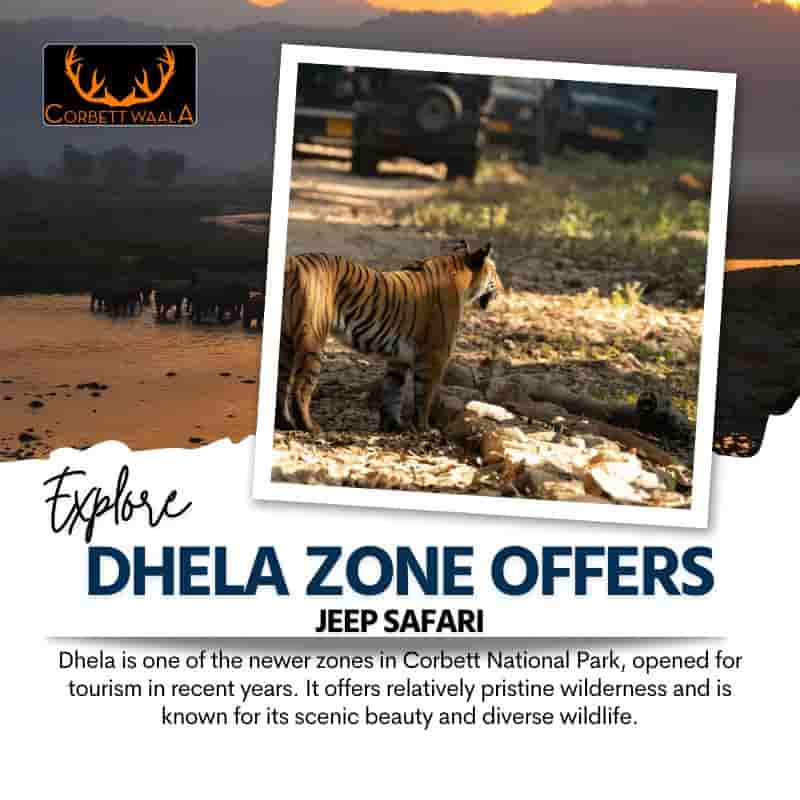
he Dhela Zone boasts a healthy population of wild animals, making every safari an exciting adventure. The star attraction, of course, is the Royal Bengal Tiger, which is often sighted along the jeep tracks or near water bodies.
However, Dhela’s wildlife goes far beyond tigers. The zone is home to a wide range of species, including:
The birdlife in Dhela Zone is equally impressive. With over 250 recorded bird species, it’s a paradise for birdwatchers. From colorful woodpeckers, kingfishers, and bee-eaters to majestic crested serpent eagles and changeable hawk eagles, the zone buzzes with avian activity, especially in the early morning. During winters, migratory birds from distant regions also add color and melody to the forests of Dhela.
Exploring the Dhela Zone is a memorable experience, offering both adventure and peace in equal measure. The safaris are conducted in open 4x4 Jeeps, accompanied by trained naturalists and government-approved guides who provide valuable insights into the flora and fauna.
The safari route covers approximately 20 kilometers inside the forest and takes around 3 to 4 hours to complete. The zone allows limited vehicle entries — around 15 in the morning and 15 in the afternoon — ensuring a calm and exclusive jungle experience.
The Dhela safari begins at the Dhela Gate, where visitors must present valid permits and ID proofs before entering. As the jeep meanders through dense woods and grasslands, every turn holds the promise of an exciting sight — a tiger marking its territory, a herd of elephants crossing the trail, or a peacock dancing in the morning sun.
Unlike Dhikala, Dhela does not have overnight forest lodges inside the zone, which helps maintain its pristine environment. However, its proximity to Ramnagar makes it easy to access from nearby resorts and hotels, allowing visitors to enjoy comfortable accommodation while experiencing raw wilderness during the day.
Although Dhela Zone remains open throughout the year, each season offers a unique charm:
While the Dhela Zone itself doesn’t have a forest rest house, there are numerous accommodation options available in Ramnagar, Dhela Village, Sawaldeh, and nearby areas. Visitors can choose from budget lodges, eco-resorts, and luxury jungle retreats depending on their preference.
Most resorts near Dhela Gate offer comprehensive packages that include accommodation, meals, and safari bookings. These properties often feature nature walks, bonfire evenings, and guided birding tours to enhance the overall experience.
All safaris in Dhela Zone are regulated by the Corbett Tiger Reserve authorities. Visitors need to book safari permits in advance through the official website of Corbett Tiger Reserve or authorized tour operators. A valid government ID proof is mandatory for booking and entry.
Only a limited number of jeeps are allowed per shift, ensuring that the zone remains undisturbed by mass tourism. Each jeep can accommodate up to six adults and two children, along with a mandatory guide and driver.
The Dhela Zone offers a distinct charm that sets it apart from the other zones of Jim Corbett. Here’s why it deserves a spot on every wildlife lover’s itinerary:
The Dhela Zone is a hidden treasure within Jim Corbett National Park, offering an extraordinary blend of wilderness, tranquility, and adventure. Its untouched beauty, diverse wildlife, and peaceful atmosphere make it a paradise for nature enthusiasts and photographers alike.
Whether you’re chasing the thrill of spotting a tiger, capturing the colors of migratory birds, or simply soaking in the serenity of the forest, Dhela promises an experience that lingers long after you’ve left its trails.
For those seeking the perfect balance between accessibility and authenticity, Dhela Zone stands as one of Corbett’s most rewarding destinations—a true celebration of nature in its wildest form.
Conclusion:
The Dhela Zone is a hidden treasure within Jim Corbett National Park, offering an extraordinary blend of wilderness, tranquility, and adventure. Its untouched beauty, diverse wildlife, and peaceful atmosphere make it a paradise for nature enthusiasts and photographers alike.
Whether you’re chasing the thrill of spotting a tiger, capturing the colors of migratory birds, or simply soaking in the serenity of the forest, Dhela promises an experience that lingers long after you’ve left its trails.
For those seeking the perfect balance between accessibility and authenticity, Dhela Zone stands as one of Corbett’s most rewarding destinations—a true celebration of nature in its wildest form.