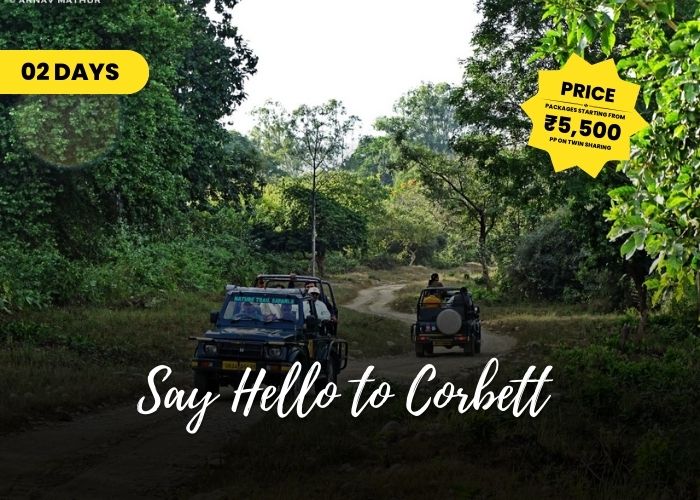
The Bijrani Zone in Jim Corbett National Park is renowned for its breathtaking landscapes and rich wildlife diversity. Located near Ramnagar, this zone features dense sal forests, open grasslands, and winding jungle trails perfect for thrilling Jeep safaris. Tourists often spot tigers, elephants, deer, and various bird species here. Known for its beautiful terrain and excellent tiger sightings, Bijrani offers an unforgettable wildlife experience, making it one of the most popular zones in Corbett.

It's highly recommended to book well in advance, especially the safari permits, which open slots up to 45 days prior. The Official Corbett Tiger Reserve website is the only source to get a safari permit. You'll need to provide ID details for all visitors. Be aware that permits are generally non-refundable. Corbett Waala also facilitate Corbett Safari bookings, often including permit, jeep, and a guide. Remember to carry your original ID!
You can only book a permit through the official website, rest other essentials like jeep and guide need to book manually. You can simply ask us to do all the hard work for you.
Jim Corbett National Park, located in Uttarakhand, is one of the most popular wildlife destinations in India. Known as the country’s first national park and the birthplace of Project Tiger, it attracts thousands of wildlife lovers every year. The biggest highlight of visiting Corbett is undoubtedly the jungle safari, which allows visitors to explore the dense forests, riverbeds, and grasslands while spotting tigers, elephants, leopards, deer, and hundreds of bird species.
If you are planning a Corbett jungle safari, here’s everything you need to know about the types of safaris, different zones, the best time to visit, useful tips, and answers to the most asked questions.
Among the six major zones of Jim Corbett National Park, the Bijrani Zone holds a special place in the hearts of wildlife enthusiasts. Famous for its breathtaking landscape, easy accessibility, and rich wildlife sightings — especially the Royal Bengal Tiger — Bijrani is a paradise for nature lovers and photographers alike. Located just a few kilometers from Ramnagar, the main entry town of Corbett, Bijrani beautifully blends adventure, serenity, and the untamed spirit of the forest.
If Dhikala is the heart of Corbett, then Bijrani is its welcoming face — inviting visitors to explore the mystery and magic of the jungle.
The Bijrani Zone lies on the eastern side of Jim Corbett National Park and is one of the most popular safari regions of the reserve. It shares similar terrain to the Dhikala zone but is comparatively drier and open, making wildlife spotting easier. The zone’s mixture of dense Sal forests, wide grasslands (Chaurs), river streams, and hilly terrain creates a perfect habitat for tigers, elephants, and a variety of bird species.
Historically, Bijrani was once used by the British for hunting expeditions due to its abundance of wildlife. Today, it stands as a symbol of successful wildlife conservation, attracting thousands of visitors each season who come to experience the wild in its purest form.
The entry gate to Bijrani is called Amdanda Gate, located around 2 km from Ramnagar town. Beyond this gate lies an enchanting world of forests, wildlife, and raw beauty that makes Bijrani a must-visit zone in Corbett.
Bijrani’s landscape is a visual treat. The moment you enter through Amdanda Gate, you’re welcomed by dense Sal and deciduous forests that soon open into vast grasslands where deer graze and elephants roam. Seasonal rivers like the Kosi and Mandal meander through the region, adding sparkle and life to the terrain.
The Bijrani Forest Rest House, located inside the zone, sits amidst lush greenery and offers mesmerizing views of the jungle. Early mornings here are magical — the golden rays of sunlight filtering through tall trees, the symphony of birds, and the faint rustle of leaves announcing the forest’s awakening.
Photographers often call Bijrani a “dream zone” because of its natural light, open meadows, and frequent animal activity. The zone’s scenic diversity ensures every turn of the track brings a new, picture-perfect scene.
When it comes to wildlife density, Bijrani ranks among the richest zones in Corbett. The terrain’s openness and grasslands make it easier to spot animals compared to other zones.
Key species found in Bijrani include:
Bijrani is also a paradise for birdwatchers. Over 500 species of birds can be found here, such as Crested Serpent Eagles, Jungle Fowls, Woodpeckers, Parakeets, Kingfishers, and Hornbills. During winters, migratory birds arrive in flocks, transforming the zone into a lively avian sanctuary.
The Bijrani Forest Rest House (FRH) offers one of the most authentic jungle stays inside Corbett. Managed by the Corbett Tiger Reserve Forest Department, the rest house was originally built during the British era and continues to retain its rustic charm.
Staying overnight inside Bijrani is a rare privilege — one can hear tigers calling at night, elephants trumpeting in the distance, and the forest alive under the starlit sky. The property offers basic yet clean rooms and dormitories, canteen facilities, and solar-powered lighting.
The location of the rest house, near the forest’s core, gives visitors a chance to truly live amidst wildlife — away from phone networks and city chaos. It’s not luxury in the traditional sense, but the experience of being surrounded by raw nature is priceless.
Note: Only guests with confirmed forest rest house bookings are allowed to stay overnight within the Bijrani Zone.
Bijrani Zone offers two types of safaris for visitors — Jeep Safari and Elephant Safari (when available).
Each jeep is accompanied by a licensed guide who helps interpret animal behavior, pugmarks, and jungle sounds — making the experience both educational and thrilling. Jeep safaris are the best way to witness the diverse wildlife of Bijrani and capture stunning photographs.
The Bijrani Zone remains open from mid-October to mid-June every year. Each season brings its own charm and wildlife activity:
From Ramnagar, tourists must report to the Amdanda Gate Reception at least 30 minutes before safari timing with valid permits and ID proofs.
Conclusion:
The Bijrani Zone of Jim Corbett National Park is a true representation of India’s wild beauty — a place where nature reigns supreme and every trail tells a story. Its accessibility from Ramnagar, stunning forest scenery, and diverse wildlife make it one of the most sought-after zones for safaris.
Whether you choose to explore it on a morning jeep ride or stay overnight in the historic rest house, Bijrani promises an experience that touches the soul. It’s more than just a safari zone — it’s a journey into the heart of the wild, where adventure meets serenity and nature reveals its untamed grace.